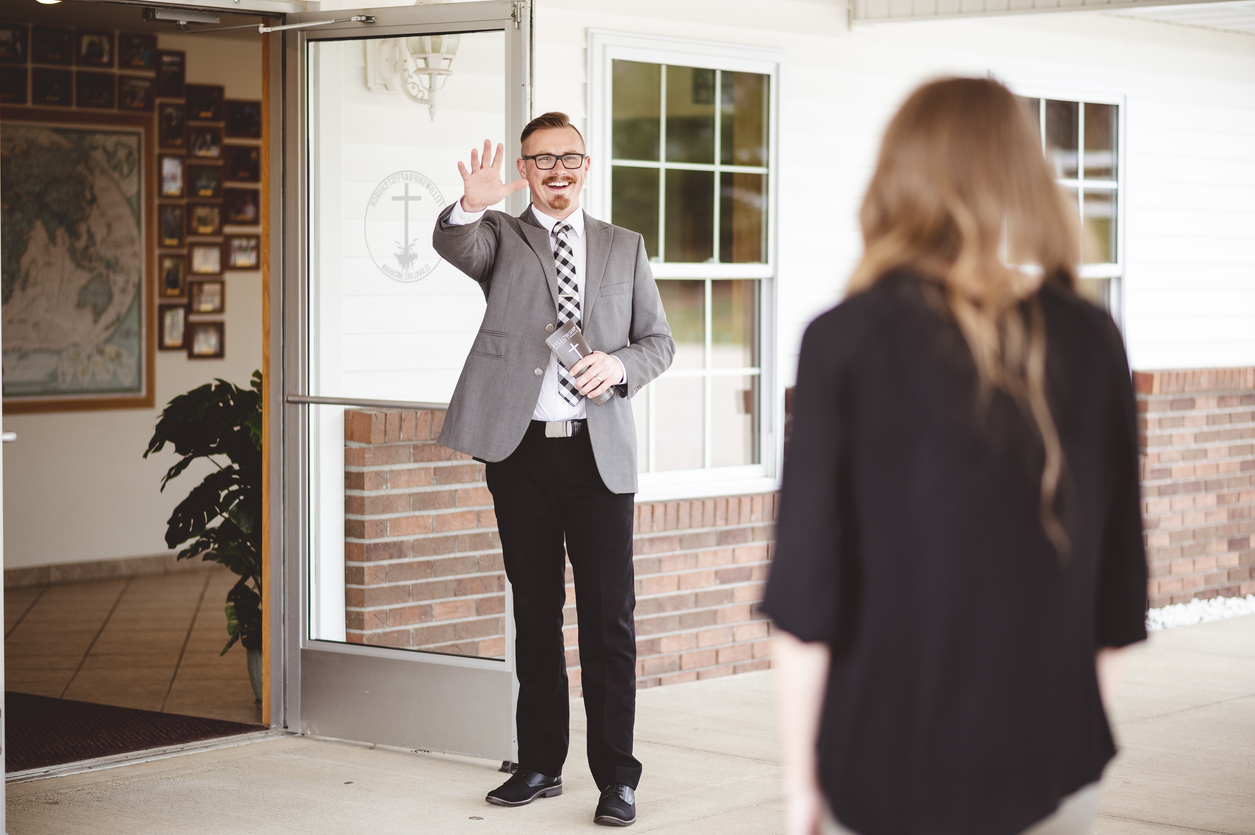
Guest services as frontline discipleship
When a guest pulls into the parking lot of your church this Sunday morning, what do they experience first – and what does that experience teach them about Jesus?

When a guest pulls into the parking lot of your church this Sunday morning, what do they experience first – and what does that experience teach them about Jesus?

iStock
For many churches, the ABCs of success are attendance, buildings and cash. While these are the easiest things to measure, pastors know they aren’t the best. There has to be a better way to measure discipleship success.

iStock
Churches do not usually burn people out because they care too little about ministry. More often, they burn people out because they care too little about process. The problem is not always the people. The problem is often the pathway. When churches exhaust people, they blame the situation rather than the process.

Adobe Stock Photo. Do not publish.
While it is tempting to seek godly counsel before God’s counsel because of the immediate answers it offers, it is better for us to seek God’s counsel first because He knows His sheep best.

When convenience becomes central, something subtle begins to shift in the culture of a church.
Invitations matter more than we often realize. Most people who visit a church do not come because of a clever slogan, a polished website, or even a well-timed social media post. They come because someone they know invited them. That “someone” makes all the difference.
Churches put tremendous energy and money into events—fall festivals, concerts, car shows, you name it—and then wonder why no one returns. It’s not that the events are bad. In fact, they’re often excellent. The problem is deeper.
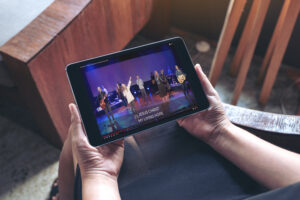
When the pandemic arrived, churches around the world had no choice but to pivot to online worship. Sanctuaries were empty, but livestreams and Zoom calls gave congregations a way to stay connected. For a time, the transition felt almost miraculous. Churches that had never considered online ministry suddenly found themselves reaching people far beyond their usual walls.
Senior adults are quietly leaving many churches. It may not be noticed but it will be felt.
Gary McIntosh and Charles Arn wrote a deeply insightful book several years ago titled “What Every Pastor Should Know”. As someone who values both research and real-life church application, I find the data in this book incredibly helpful. One of the most eye-opening sections focuses on church member retention – and the patterns behind why people drop out. The findings are not only illuminating; they’re actionable.
In many circles today, the church bulletin—or worship folder, as some prefer to call it—has been relegated to relic status. It’s often seen as a leftover from a bygone era, something traditional churches cling to while more “cutting-edge” congregations go completely digital. Some church leaders proudly announce that they’ve ditched the bulletin altogether. Thom Rainer believes that is a mistake.
An “unforced error” is a term borrowed from sports, especially tennis, meaning a mistake made due to one’s own lapse rather than being forced by an opponent. In everyday language, it refers to an avoidable mistake or misstep, typically resulting from a lack of attention or care rather than external pressure.
There are a lot of us Baby Boomer pastors and Christian leaders around. And it’s cliché, but we aren’t getting any younger. It’s a quiet question that many are asking, but they are asking it nonetheless: What age should I retire?